|
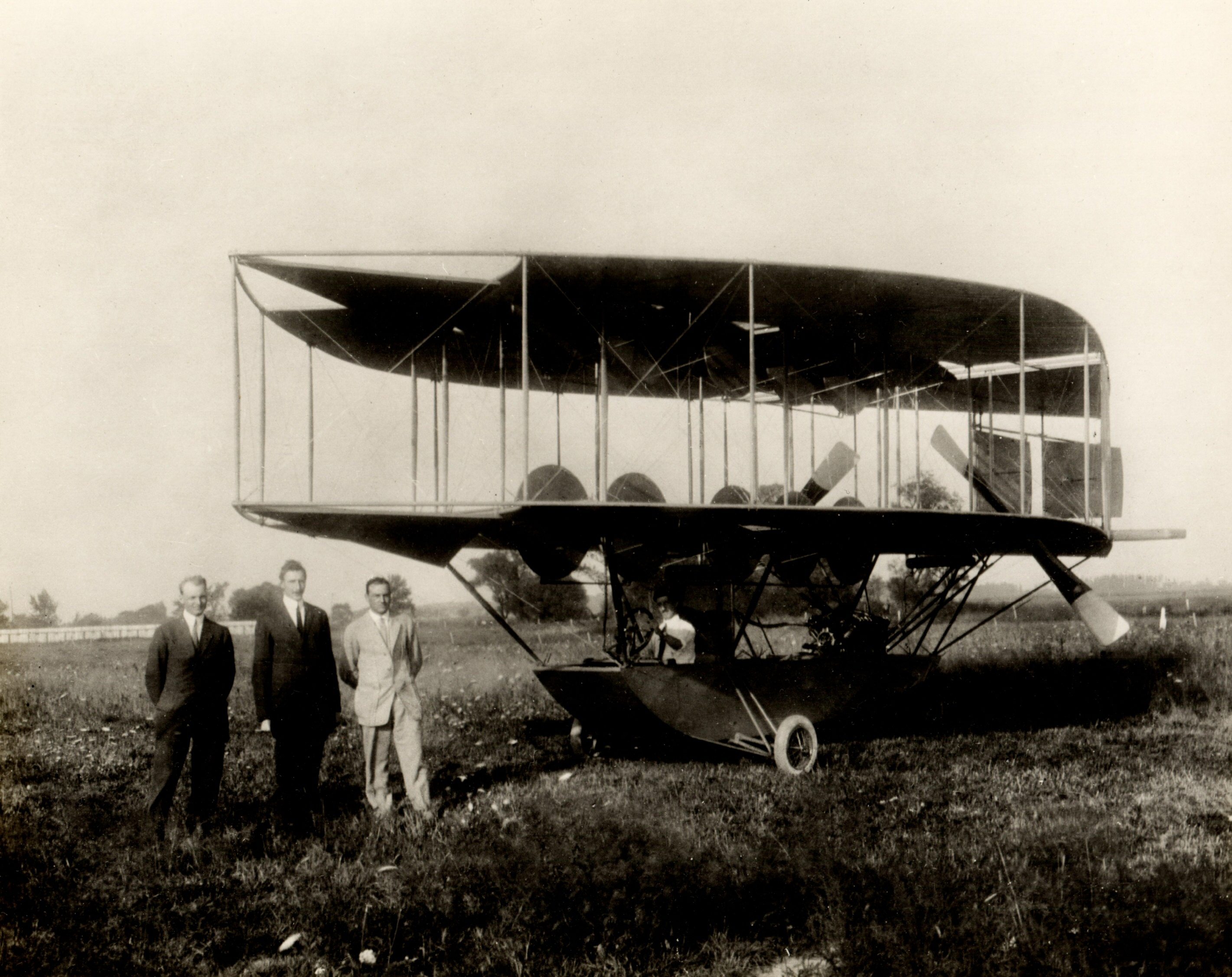
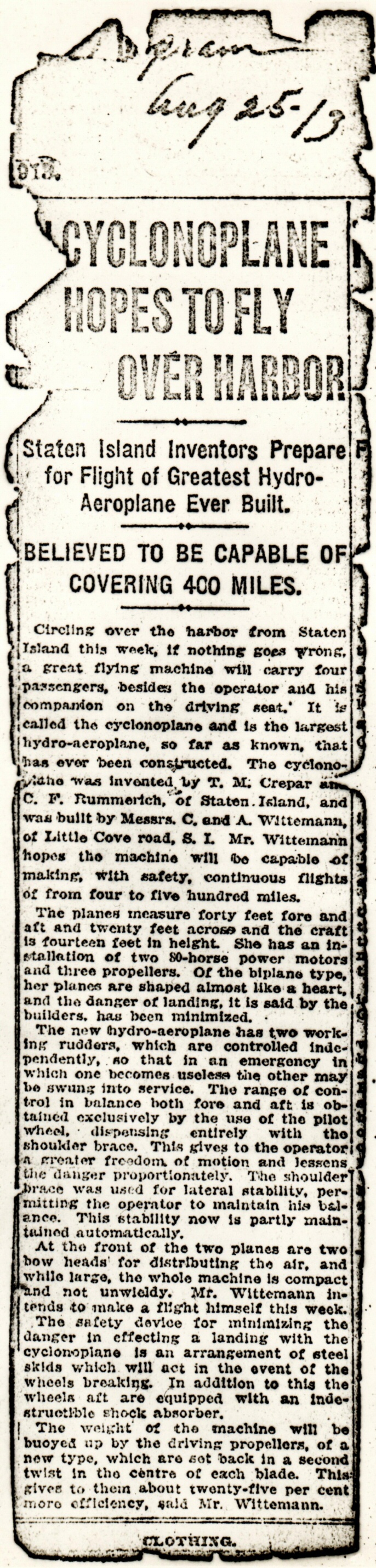
Cyril F. Rumreich had an unusual connection to the earliest years of powered flight. By 1913, he was associated with inventor Thomas M. Crepar in the development of an experimental aircraft called the Cyclonoplane, or Cyclona-Plane. A contemporary newspaper account explicitly credited the machine as having been "invented by T. M. Crepar and C. F. Rummerich, of Staten Island," while C. and A. Wittemann of Staten Island were identified as the builders.
Rumreich's connection with Crepar may have grown out of their shared railroad background. Both men worked as railroad telegraph operators in the Minnesota region. Crepar had earlier been an operator for the Flint & Pere Marquette Railroad and later lived and worked in Minnesota and North Dakota. Cyril likewise worked as a railroad telegraph operator and later settled in Mahnomen, Minnesota. Their common occupation would have placed them within the relatively close-knit network of railroad telegraphers of the era, providing a plausible avenue by which the two men came to know one another. Crepar was already an experienced aviation inventor by the time Cyril became involved. He had obtained several patents for airships and flying machines, including U.S. Patent 588,556, issued in 1897. Crepar's earlier work was significant enough to become part of the prior-art record in the famous litigation over the Wright brothers' airplane patent. In Wright Co. v. Herring-Curtiss Co. in 1913, the court specifically discussed the Crepar patent among earlier aircraft patents having horizontal and vertical rudders. The court ultimately concluded that Crepar's lighter-than-air design did not perform the same function as the Wright brothers' patented control system, so it did not invalidate the Wright patent. The photograph of Crepar, Rumreich, and the Wittemann brothers with the Cyclonoplane captures more than an obscure aviation experiment. It places Cyril Rumreich, a young man from Pisek who made his career as a railroad telegrapher in Minnesota, directly alongside an established aviation inventor and two pioneering aircraft builders during a period when the basic principles of powered flight were still being worked out. For the Rumreich family, it is remarkable evidence that Cyril briefly participated at the leading edge of American aviation experimentation only a decade after the Wright brothers' first flight.
|
|